Clixa networks Talk to a specialist
EN

Clixa for networks, franchises and multi-location groupsYour whole network on one screen.
Each location with its own autonomy.

Each location serves customers on WhatsApp, Instagram and the website with its own Clixa. The franchisor follows the whole network in a separate dashboard, sets the customer service standard and launches actions across all locations at once, without taking from each location what belongs to it.

Official WhatsApp via Meta's API, one number per location. Guided onboarding.

WhatsApp Business Platform · Meta's official API

The franchisor is the last to know.

Each location serves customers the way it learned, on a WhatsApp headquarters can't see. When the numbers arrive, they arrive late and in a spreadsheet: a month later, without knowing what was offered, what the customer asked for and what was lost along the way. Standardizing means circulating a message in the group, and no one knows who applied it.

  • No view of the operation: headquarters doesn't know how many conversations the network had yesterday.
  • Each location handles customers differently, and the brand experience changes from city to city.
  • Launches announced in a WhatsApp group: half the locations don't apply them, and nobody follows up.
  • Invisible opportunity: the product that sells well in one market and doesn't even exist in the others.

See how networks sign up

A layer of hierarchy over the network

The franchisor gets its own dashboard, separate from the system the locations use day to day. From there it sees everyone's operations, compares performance and manages the network. Each location keeps its own account: team, WhatsApp number, customers and calendar still belong to the location.

What the franchisor sees

  • Conversations, leads and orders by location, with ranking and trends.
  • Each branch's status: active, suspended and who pays the subscription.
  • Leads and conversations from each location, according to the agreed policy.
  • Who published each standard and each action, and when.

What still belongs to the location

  • Its account, team and access roles.
  • Its channels: WhatsApp and Instagram in the location's name.
  • Price, promotion and photos for each item, because each market sets its own price.
  • The decision to share leads and conversations, when the policy leaves it up to the location.

The link between the network and the location only exists after the location's administrator accepts, seeing in writing what the franchisor will be able to see. Nothing is shared before that, and every access by headquarters to a location's data is logged.

What you only see with the whole network together

A single location knows what it sold. The network as a whole knows what the market is asking for, and that is a portfolio decision, not an end-of-month report. It is the difference between the franchisor tracking the network's revenue and the franchisor influencing the network's revenue: finding out what to sell, where it isn't being sold yet and what is being shown to customers without turning into an order.

01

What sells most across the network

Ranking by item, in units and in revenue, and in how many markets each one sells.

02

Offered vs. ordered

How many times the item was shown to the customer during service and how many times it became an order. An item shown a lot and ordered little usually points to price, photo or description, not lack of demand.

03

Coverage opportunity

What sells well in the network and isn't active yet in some locations. It's a product opportunity coming from data, not intuition.

These are numbers aggregated by item, never by customer, and only locations whose policy allows sharing metrics are counted. The dashboard says how many were included: a partial number presented as a total is worse than no number at all.

Standardize without straitjacketing

The franchisor decides, area by area, how much freedom each location has. It's the difference between a network with an identity and a network that smothers the people running it.

Free

The network has no say in this area. Each location does it its own way.

Starting standard

The location starts with the network standard and can customize it. Those who already customized are not overwritten when headquarters publishes again.

Locked standard

Managed by the network. The location can see it but not edit it, and updates reach all of them.

It applies to the artificial intelligence instructions, the customer service messages, the sales tactics and the catalog structure. The standard is published from a model location, the network's pilot store: what works there becomes the standard for the others, without anyone rebuilding anything by hand.

Launches and promotions in all locations, on the same day

1

The franchisor puts together the campaign, announcement, launch or promotion, with the items, discount and period.

2

Publish to the network. Each location gets the proposal in its own dashboard.

3

The location applies it with one click. The discount is calculated on its own price, not on a headquarters price.

4

The franchisor tracks adoption, and at the end of the period prices go back automatically.

The network proposes and the location applies, for a practical reason: the advertised price is the responsibility of whoever sells, and mass messaging depends on the consent of that location's contacts. That's what keeps the campaign within the law and each franchisee's number safe.

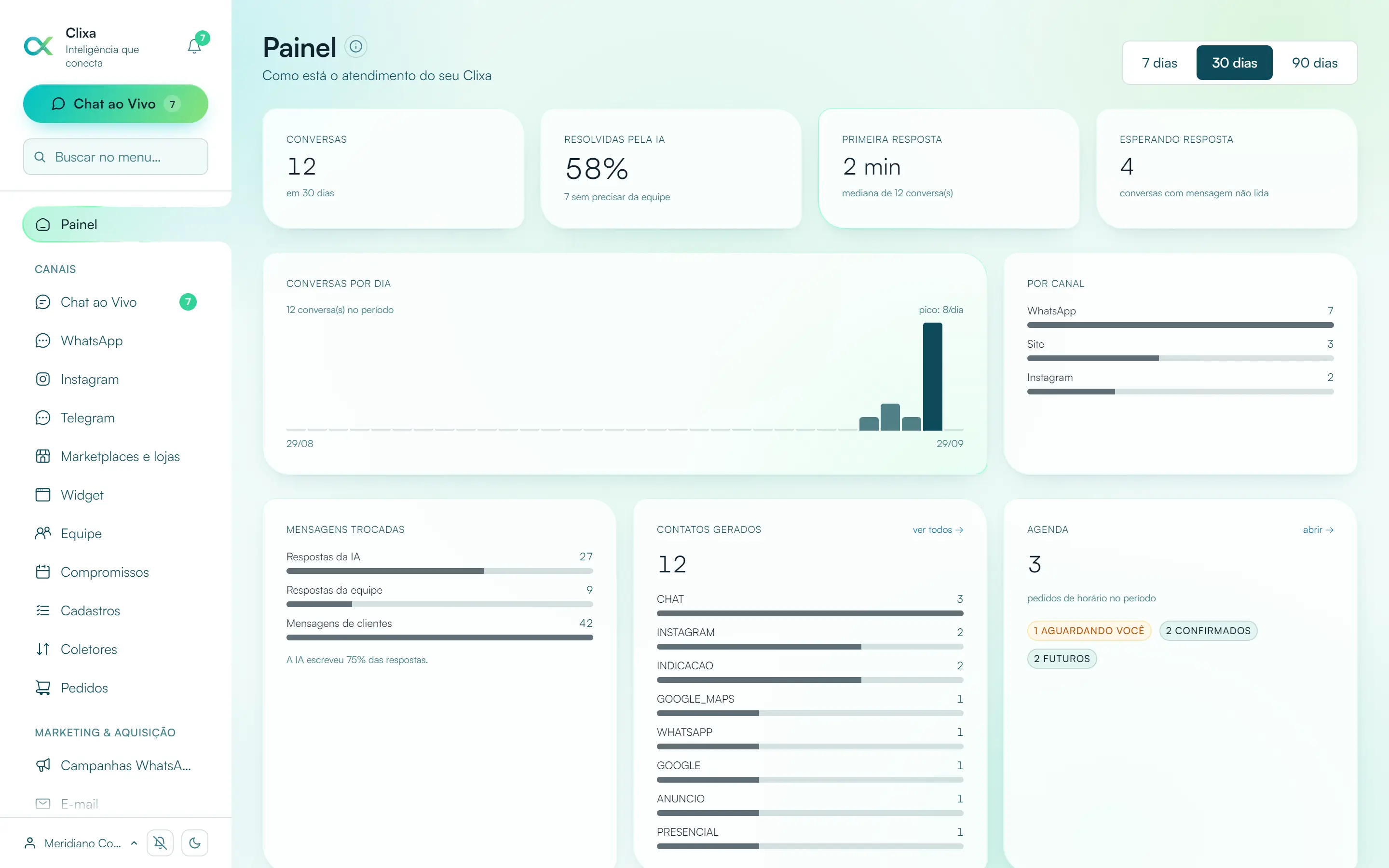
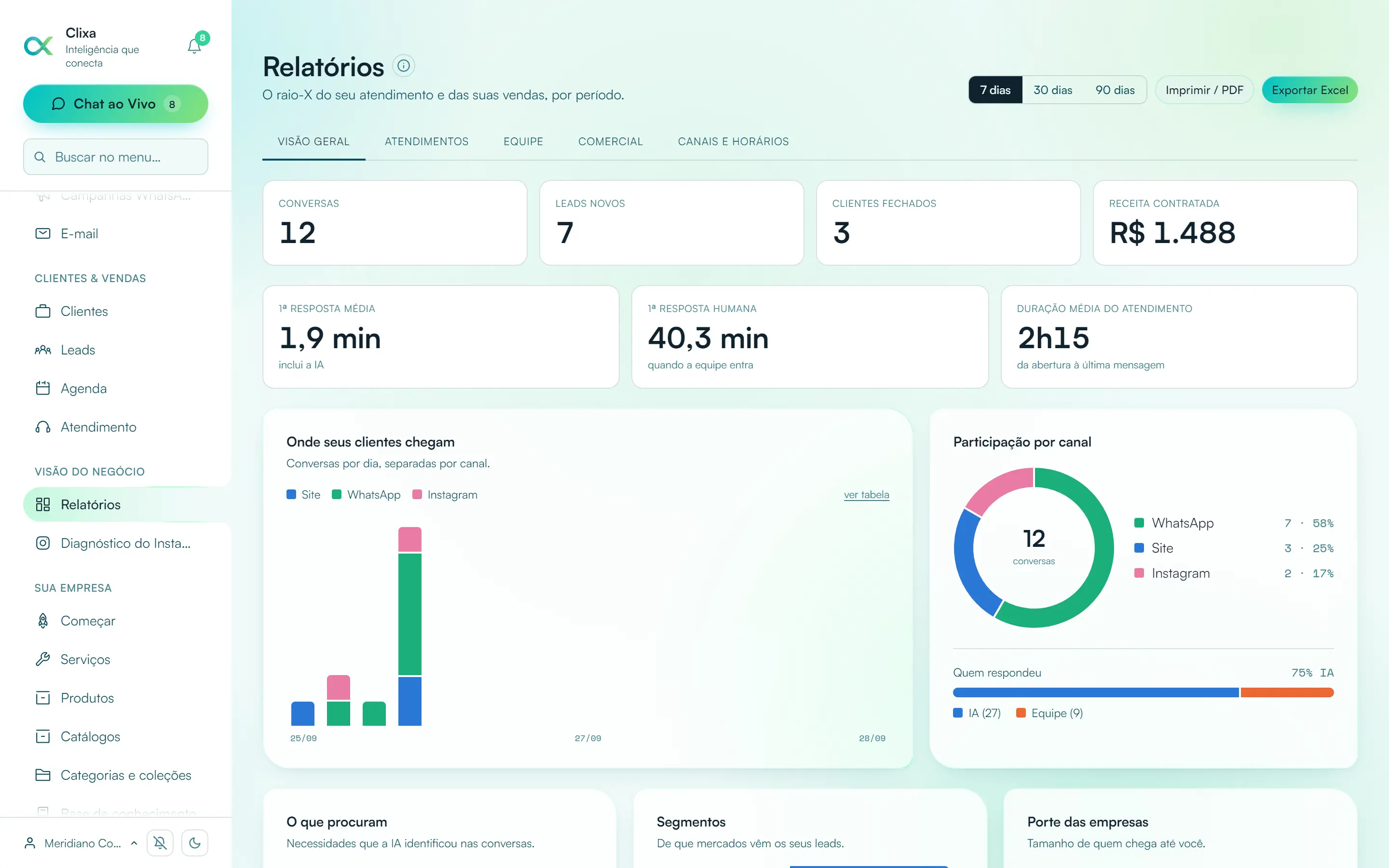
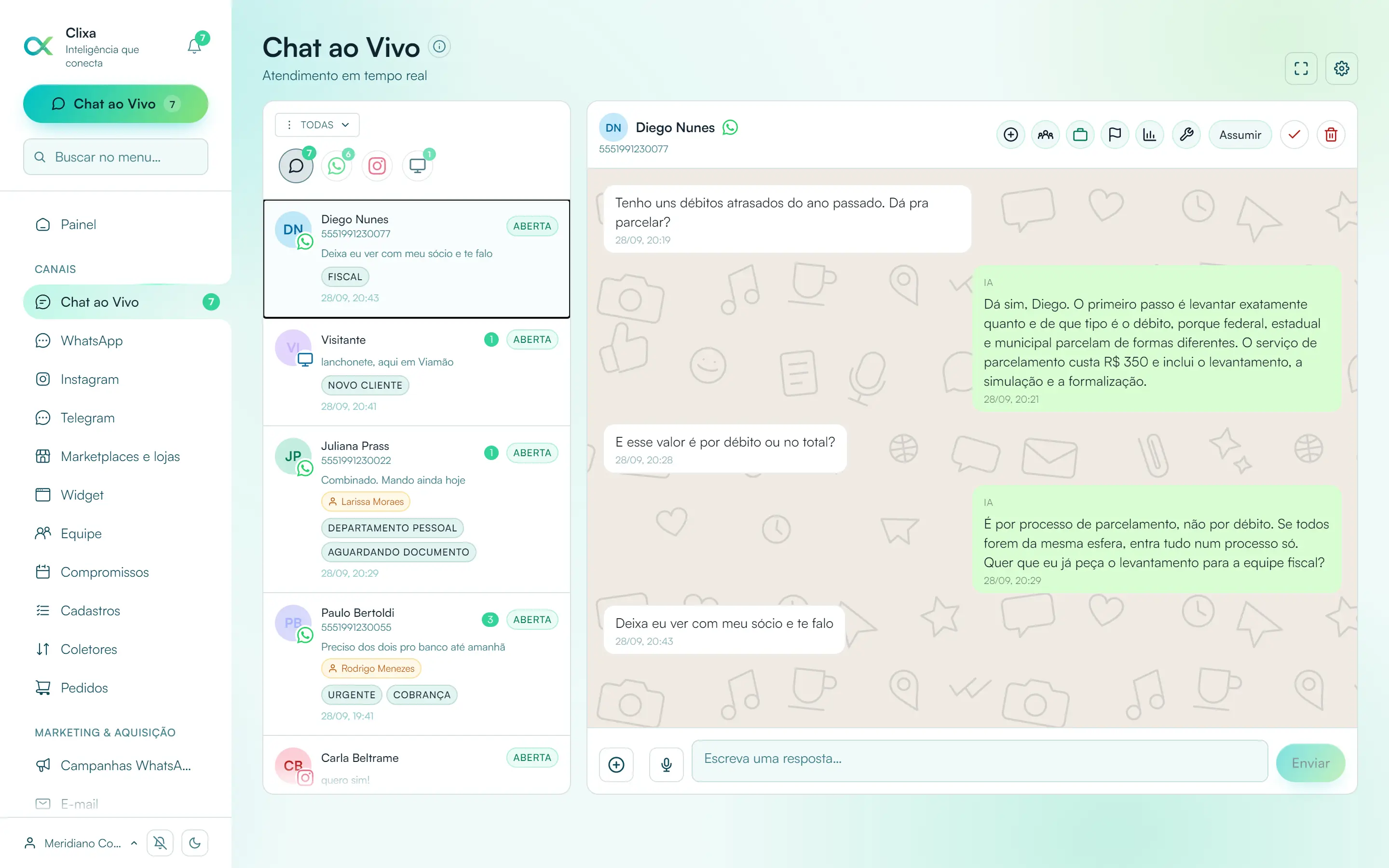
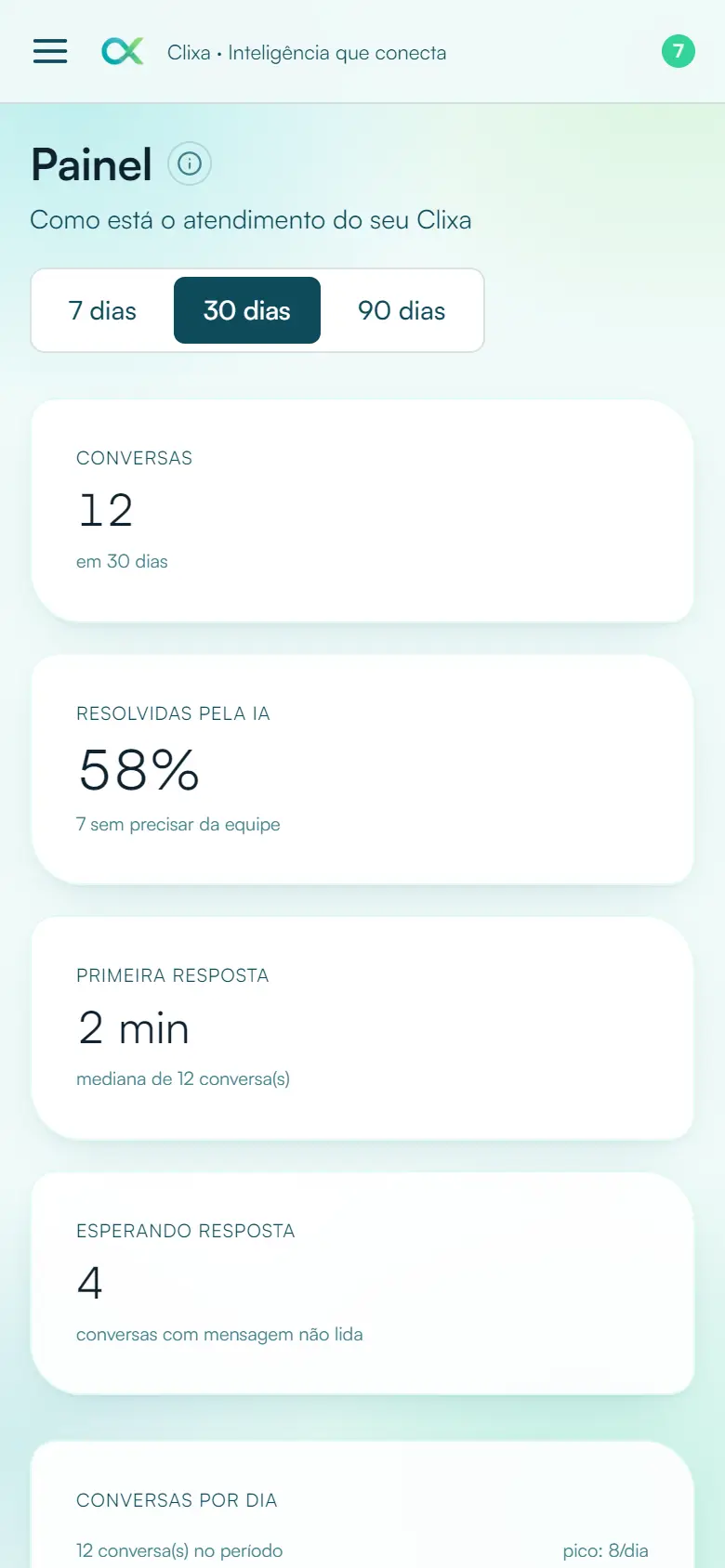
The system from the inside

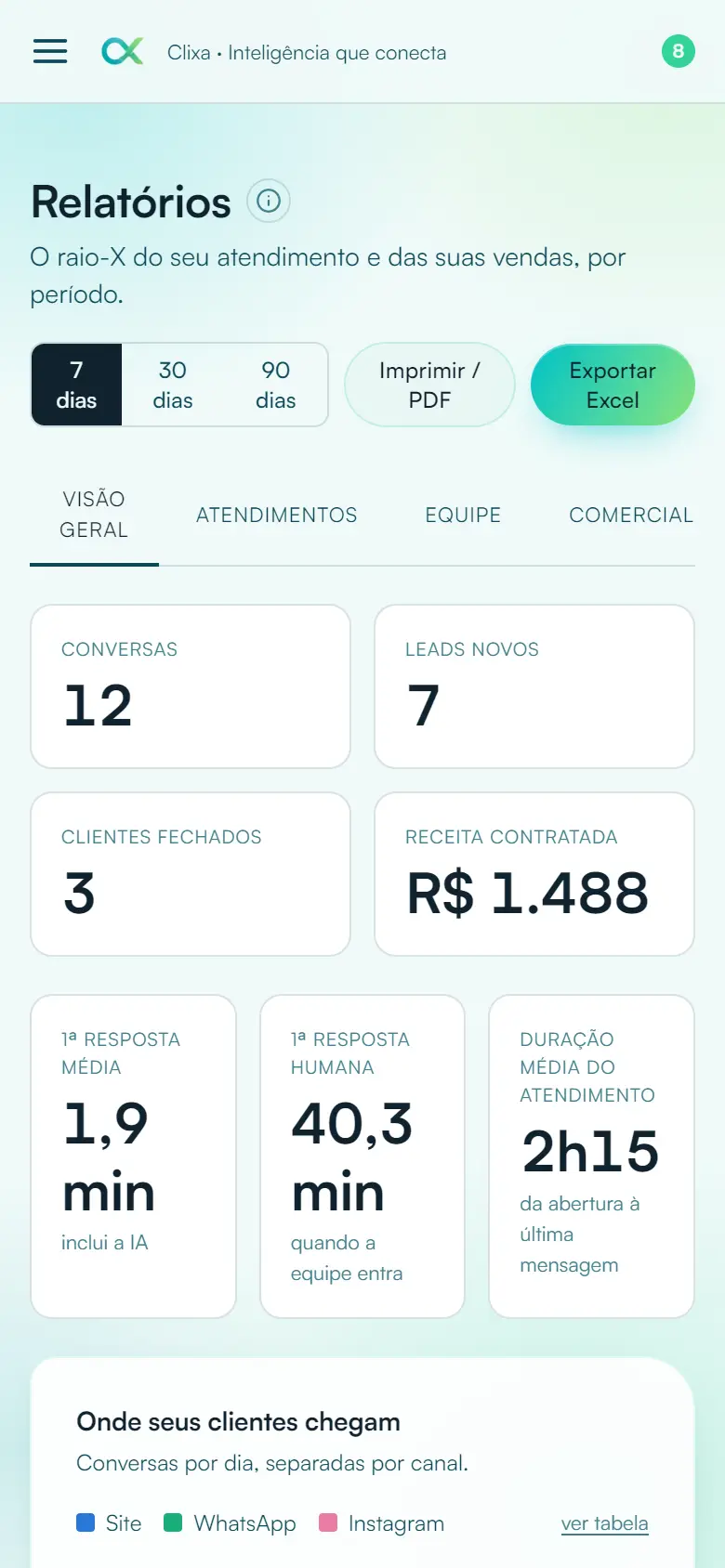
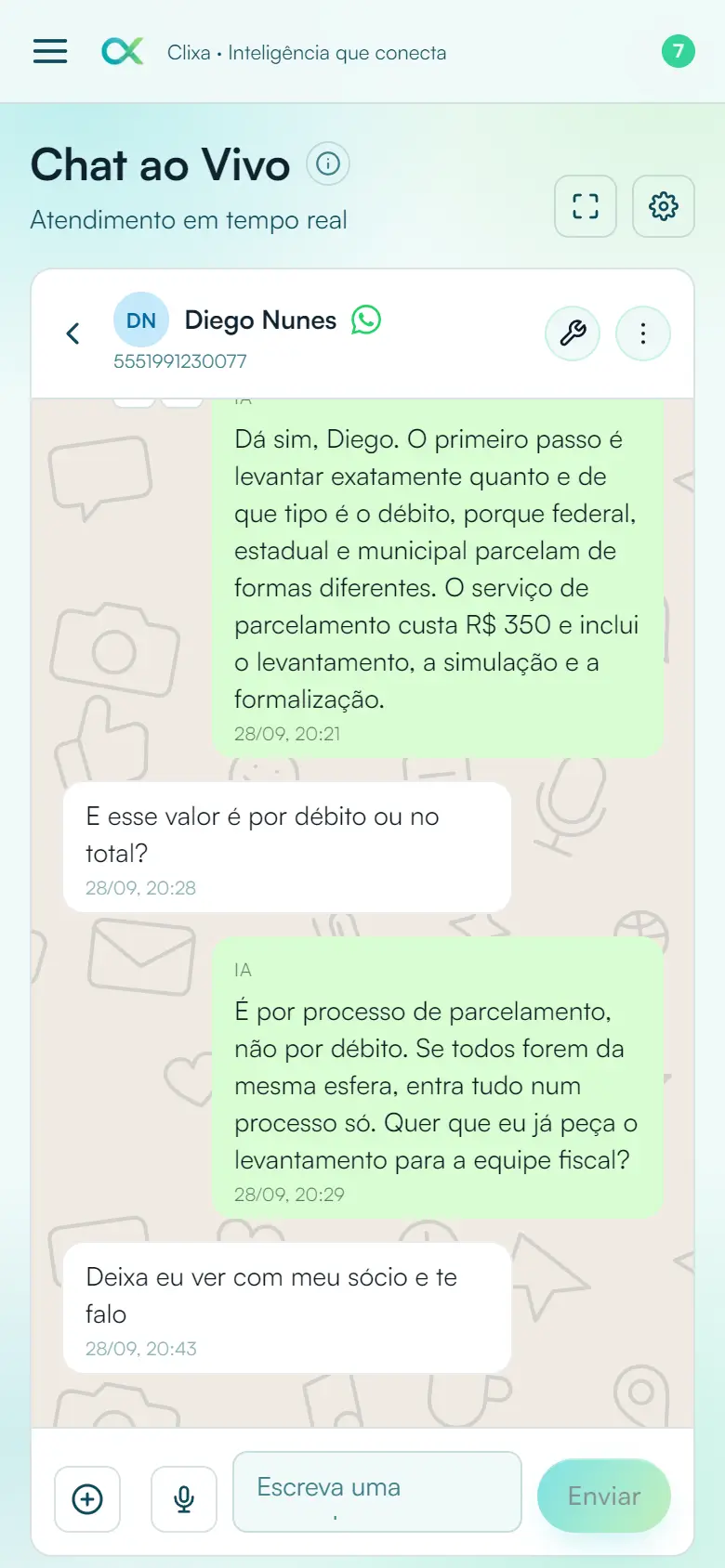
Real screenshots of Clixa that each location uses every day.

Clixa dashboard with customer service numbers Clixa reports: conversations by channel, response time and team results Clixa inbox on a computer: WhatsApp, Instagram and website conversations in the same list
Clixa dashboard on mobile Clixa reports on mobile Clixa on your phone: the same inbox

The location operates in its own Clixa; the franchisor sees the whole network in a separate dashboard.

How the network subscribes

The subscription can be paid by the franchisor or by each location, and this is set location by location. When headquarters pays, it also controls access: it suspends and reactivates when needed, without the location losing any data.

Pricing is agreed per network, based on the number of locations and what each one uses. There's no plans table on this page on purpose: a network is a contract, and contracts are discussed.

Questions from people who run a network

Does the franchisor see the locations' customer conversations?

Only if the network policy allows it and, when the policy leaves the choice to the location, only if its administrator authorizes it. Aggregated numbers are usually always shared; leads and conversation content depend on what was agreed in the link. The location sees this policy in writing before accepting, and every access by headquarters to its data is logged.

Does the location lose autonomy?

No. Each location has its own account, with its own team, WhatsApp number, schedule and customers. The franchisor chooses, area by area, what is free, what is an initial suggestion and what is a locked standard. Even with a standardized catalog, price, promotions and photos remain each location's own.

How does a promotion work across the whole network?

The franchisor creates the campaign, chooses the items and the discount and publishes it. Each location receives it as a proposal and applies it with one click, with the discount calculated on its own price, not on a fixed headquarters price. The dashboard shows how many applied it, and the promotion goes back to the previous price automatically at the end of the period.

Who pays the subscription for each location?

However the network prefers, and it can differ by location: the franchisor pays on its own card or each franchisee pays for their own. When headquarters pays, it can also suspend and reactivate a location's access when needed.

What happens when a location leaves the network?

Its account keeps working, now on its own. The franchisor's access to the data ends immediately, the standards unlock and what belonged to the location before standardization can be restored by it.

What is Clixa?

Clixa is a customer service platform that brings WhatsApp, Instagram Direct and your website chat into a single inbox, with an AI that answers customers instantly and hands the conversation to a human agent when the subject calls for it. It's designed for small and medium businesses that sell and serve customers by message.

Is it the official WhatsApp? Can my number be banned?

It's official WhatsApp for businesses: Meta's WhatsApp Business Platform (Cloud API), with your company's number. Because it is Meta's official route for businesses, there is no risk of the blocking that hits solutions automating the WhatsApp app outside the rules. There's no need to keep a phone turned on.

Does the AI reply on its own? What if it doesn't know?

The AI replies using the content you register, catalog, prices and your business rules. When the question goes beyond what it knows, or when the customer asks for a person, the conversation is handed to the agent with the full history. You can also turn off automatic replies and use Clixa only as a shared inbox.

Will the AI reply to every message when the customer sends it in pieces?

No. Clixa waits for the customer to stop typing before answering, by default ten seconds of silence. If the person sends "Hi", then the order and then a detail, the AI reads it all together and replies just once. In the website chat, it also notices when the visitor is still typing and waits.

How many people on my team can use it?

It depends on the plan: Essencial includes 2 users, Pro includes 5 and Max includes 10. Plans also differ in the AI's workload, 300, 1,500 or 5,000 conversations per month on WhatsApp and Instagram (no limit on website chat), and in the number of connected accounts. Everyone sees the same inbox, and each conversation shows which agent is handling it.

Can I use more than one WhatsApp number?

Yes. You can connect several WhatsApp numbers and several Instagram accounts in the same organization, each with its own customer service and AI settings. The reply always goes out from the same number the customer used to talk to you.

Do I need to install anything?

No. Clixa works in the browser, on computer and phone. For the website chat, just paste one line of code into your site, on any platform, including WordPress, Wix and online stores.

How long does it take to start serving customers?

The account is created in minutes and the website chat works as soon as you paste the code. Connecting official WhatsApp depends on your business verification with Meta, which is usually the slowest step in the process.

Can I send mass messages on WhatsApp?

Yes, within Meta's rules: with an approved message template, sending only to people who gave consent and immediately respecting anyone who replies "STOP". Clixa controls the sending pace to protect your number's reputation.

Does Clixa also handle and send email?

Yes, both ways. Your business email inbox joins the same inbox as WhatsApp and Instagram, with the AI replying whenever you want. And for promotion, you import lists with consent records (LGPD), segment by your funnel data and send mailings and automations through your own email account, with no cost per send. Unsubscribing is automatic in one click, and invalid addresses are removed from the list on their own to protect your mailbox's reputation.

Are my data and my customers' data safe?

Each organization has its data isolated from the platform's other customers. Every file received is checked by its real content and goes through antivirus before reaching your team, and attachments are only accessible through signed links with an expiration.

Is there a trial period? Do I need a card?

It's a 7-day free trial and no card is needed to start. You can change plans or cancel whenever you want.

What's the difference between Clixa and a regular CRM?

A regular CRM organizes customers that someone has to type in. Clixa records them on its own: every conversation becomes a contact with name, phone, source channel and full history, with no spreadsheet and no typing. For most businesses that sell through messaging, this replaces the CRM; if you already use one, Clixa feeds your records with what today gets lost on WhatsApp.

Let's design your network on Clixa

Tell us how many locations you have and how customer service works today. We'll show you the network dashboard in action and plan the rollout with you.

Talk to a specialist

Support in Portuguese, from the people who build the product.